Lucknow: What began as a traditional religious observance has evolved into one of the largest community-driven social initiatives in the country. This year’s Jyeshtha Mangal celebrations in Lucknow witnessed more than 15,000 community feasts (bhandaras) across the city, serving prasad to an estimated 30 million devotees while promoting environmental sustainability, cleanliness, and social inclusion.
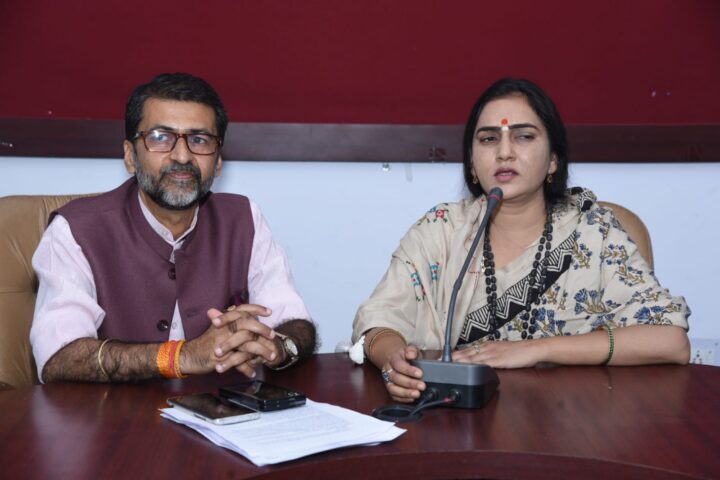
Addressing a press conference organized by Mangalman Sanstha at Vishva Samvad Kendra, organizers described “Mangal Mahotsav 2026” as a model of collective participation that combined faith with social responsibility. Prashant Bhatia said the celebrations demonstrated how traditional cultural practices can strengthen community bonds, encourage discipline, and foster self-reliance.
According to organizers, the event generated an economic impact exceeding ₹150 crore without any direct government budgetary support. The large-scale initiative created employment opportunities for sweet makers, tent operators, transport providers, flower vendors, and daily wage workers, contributing nearly 150,000 human workdays.
Environmental conservation remained a central theme throughout the celebrations. Water conservation activist Shipra Pathak revealed that organizers distributed one lakh saplings along with eco-friendly serving materials, including eight lakh biodegradable bowls, four lakh leaf plates, and one lakh wooden spoons. More than 550 bhandaras were reportedly conducted without the use of plastic or thermocol, while several venues adopted steel utensils through community “utensil banks.”
The celebrations also highlighted social harmony, with people from diverse backgrounds sharing meals together and participating in service activities. Special food distribution drives were organized in underprivileged settlements, ensuring outreach to economically weaker sections of society. Families spanning multiple generations joined volunteer efforts, reinforcing community participation.

Faced with concerns over possible LPG supply disruptions linked to international geopolitical tensions, several organizers adopted biomass-based eco-friendly cooking systems, promoting the use of sustainable local resources.
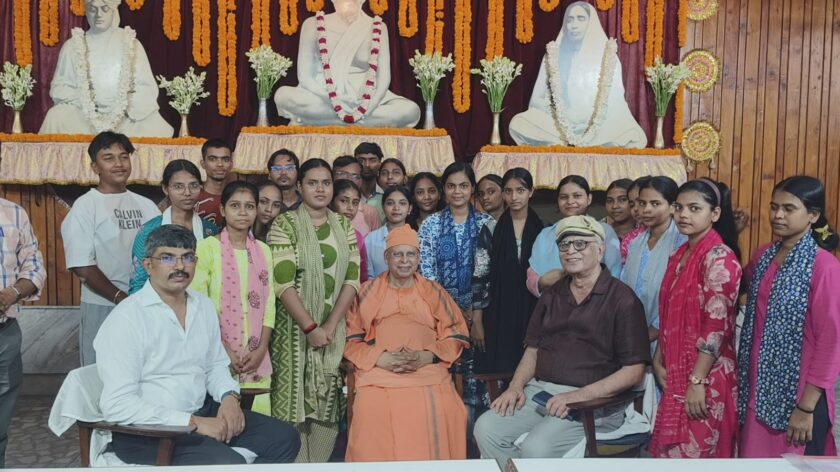
To assess the event’s social and environmental impact, a team of 45 students under the guidance of Prof. Uday Pratap Singh, Head of the Department of Anthropology at University of Lucknow, conducted a comprehensive survey across eight groups. The findings are expected to contribute to future academic and social research.
More than 700 volunteers from various organizations, including Panchatatva Foundation, Akhand Hind Fauj, Lok Bharati, Prakriti Bharati, Students for Development, Maa Janaki Seva Sansthan, NSS, and Bharat Scouts and Guides, played a key role in managing the campaign. The municipal administration supported the effort through enhanced sanitation and waste-management measures, while awareness campaigns were conducted through residential welfare groups.
Organizers announced that outstanding bhandara organizers will be honored by the district administration for excellence in innovation, cleanliness, management, and environmental stewardship. Looking ahead, they also expressed plans to transform the Bada Mangal initiative into a fully digital, plug-and-play model that could serve as a benchmark for large-scale community events across India and beyond.